All voices matter
Bysonu
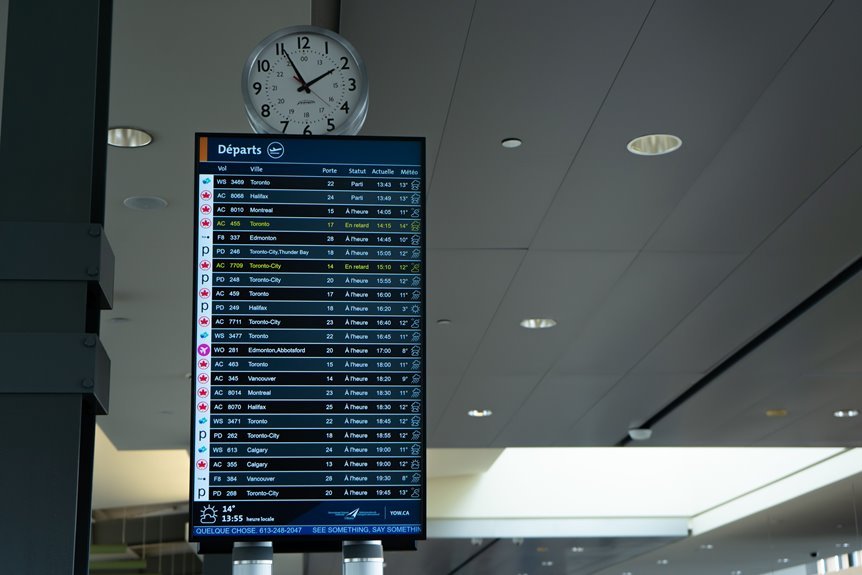
Departure Time Fight sd1555958a
Departure time discipline reveals how small shifts in departure timing cascade into wider system effects. Timetable discipline, forecasting signals, and probabilistic planning interact to shape efficiency and risk. Passengers and crews adjust in real time, reallocating tasks and re-sequencing boarding as buffers tighten. The ripple extends to connections and downstream schedules, demanding disciplined governance and rapid contingency execution to maintain resilience. The stakes for managers and planners remain clear, but the path forward is not straightforward.
What Departure Time Fight Tells Us About Delays and Scheduling
The departure time fight reveals how small scheduling choices accumulate into larger delays and cascading disruptions.
The analysis focuses on departure timing as a systemic lever, where marginal shifts alter buffers, dutifully shaping delay forecasting outcomes.
Passenger adaptation and crew coordination emerge as critical mediators, yet their effectiveness hinges on transparent timing signals, disciplined sequencing, and disciplined operational discipline across the timetable.
Inside the Moment: How Passengers and Crews Adapt in Real Time
Inside theMoment, passengers and crews continuously reallocate time and actions as events unfold, translating small delays into adaptive strategies.
The process reveals departure dynamics as individuals adjust pacing, prioritization, and workflow.
Crew adaptation emerges through briefings, staggered responses, and realignments of tasks, while passengers recalibrate boarding sequences and seating choices.
Ripple Effects: Connections, Timelines, and the Domino Effect of One Window
Ripple effects propagate through the system as connections, timelines, and single-point decisions unfold from one window.
Departure dynamics shape downstream actions, revealing how a single choice reconfigures schedules, allocations, and responsibilities.
The timeline ripple demonstrates interdependencies: delays propagate, buffers shrink, and coordination tightens.
Analysts measure propensity for cascading impact, clarifying risks, efficiencies, and resilience within the overall operational network.
Strategies for Managing Uncertainty: Predicting, Preparing, and Responding
Uncertainty can be quantified through scenario analysis, probabilistic forecasting, and early warning indicators, enabling organizations to anticipate variability and its potential impacts. The approach emphasizes departure timing, uncertainty management, predictive planning, and contingency execution.
Preparedness translates into structured decision processes, rapid reallocation of resources, and disciplined risk governance, fostering resilience.
Detachment ensures analytical rigor while guiding strategic choices under evolving conditions.
Frequently Asked Questions
How Is Airline Crew Fatigue Accounted for in Schedule Changes?
Aircraft rotation and fatigue management are integrated into schedule changes by evaluating remaining duty limits, rest opportunities, and forecasting potential fatigue. The process prioritizes safety, balancing operational efficiency with crew well-being and adherence to regulatory fatigue rules.
Do Airports Offer Compensation for Lengthened Layovers Due to Delays?
Airports generally do not offer compensation for lengthened layovers due to delays; policies vary, but neutral observers note itineraries affected by aircraft maintenance or crowded passenger seating influence layover durations and compensation considerations.
What Legal Rights Accompany Delayed or Canceled Departures?
Delayed or canceled departures trigger specific rights: passengers may seek compensation eligibility and remedies under applicable laws, though unrelated delays often lack uniform coverage. Statistically, one in four flights experiences disruption, prompting varied protections and relief options for travelers.
How Are Unrelated International Connections Affected by a Single Delay?
Unrelated international connections are disrupted as one delay propagates through scheduling, causing missed departures and tightened buffers. The affected unrelated network may reroute, while terminal connections face cascading rebooking issues, impacting arrival options and passenger flexibility across terminals.
Can Passengers Influence Departure Windows for Smoother Transitions?
Passengers can influence departure windows through advocacy and airline coordination, though outcomes vary; organized passenger advocacy can improve transparency, while layover economics shape timelines, balancing costs, staffing, and schedule reliability for smoother transitions.
Conclusion
Delays in departure times illuminate how small timing shifts cascade through schedules, buffers, and crew tasks. The study shows disciplined governance, rapid contingency execution, and data-driven forecasting as essential resilience tools. Passengers and staff continually adapt, re-sequencing boarding and reallocation of resources in real time, while downstream connections absorb the impact via ripple effects. Is coherence across timetable discipline, forecasting signals, and probabilistic planning the only path to minimize systemic risk and sustain operational integrity? The answer rests in disciplined execution.